
Any Convenient Label
Why we love psychological shortcuts and what they cost us

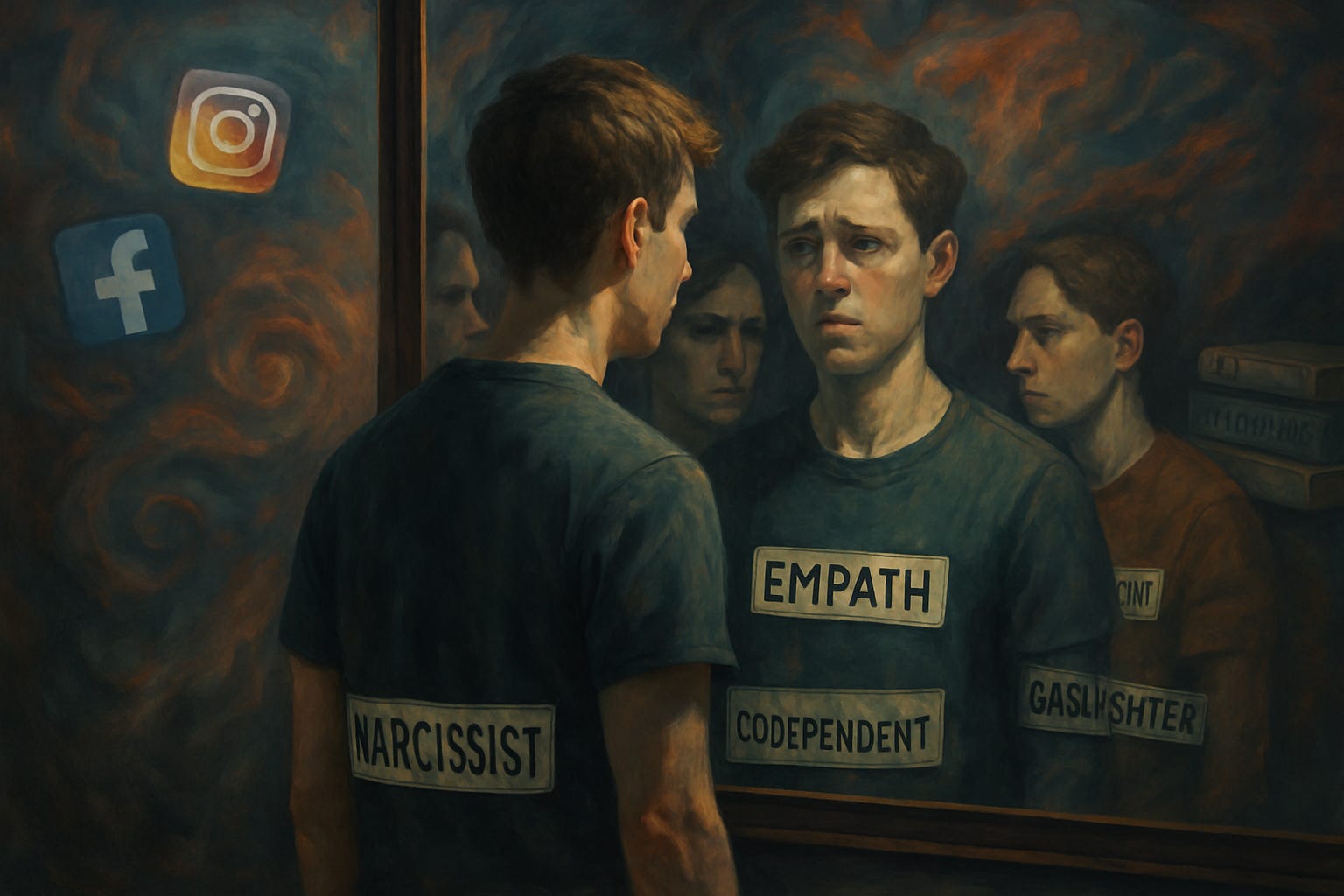
There's a game we play now, often without realizing it. It goes like this: something uncomfortable happens—someone is rude, distant, unreliable, arrogant—and instead of feeling our way through the complexity of it, we slap on a convenient label. Narcissist. Borderline. Codependent. Empath. Gaslighter. Sociopath. Psychopath. I’m sure you can think of many more. It feels like clarity. But is it really?
Narcissist, for example, is often just name-calling when we don't get our own way. We use derogatory terms to diminish others and make ourselves feel more powerful in a situation where we clearly feel powerless. Instead of addressing the issue that's really bothering us, we diagnose. There are so many internet therapists online today that nowadays everyone's a therapist – and everyone's a narcissist!
There are numerous opportunities for name-calling, all intended to diminish someone else. It used to be political ideologies such as Communist and Nazi (still is in some places). Yet, nowadays, the internet has made us all amateur diagnosticians rather than experts in political ideologies. TikTok therapists, Instagram infographics, and Reddit threads have turned technical psychological terms into blunt instruments. The overuse and misuse of these terms means that we no longer ask why someone is the way they are. We name it, file it, and move on, declaring ourselves the victor and a superior human being. It's clean, efficient, and uncomplicated. We didn't have to think much about applying the label; however, it's also completely misleading.
Here's the fascinating part: When we call someone a narcissist, we rarely stop to consider how much of that label also fits us. And here's the twist: It should. If we didn't have narcissistic traits, we'd never have survived childhood. We wouldn't fight for food, attention, or recognition. We wouldn't believe we mattered. We wouldn't try.
Subscribe to keep reading and explore how Spinoza, modern psychology, famous figures, and Martin Butler's negative philosophy reshape the way we think about human behaviour.
